

Understanding public transport in Dublin
You’re here in Dublin, and it’s your oyster. It’s a very walkable city, and you can get between many of the main sights on foot, but for longer stretches, coastal trips, or the inevitable rain, public transport is your friend. Here’s how it all works.
First things first: the Leap Card
If you’re using public transport in Dublin, a physical Leap Card is the simplest place to start. It costs €5 to buy, and you can order one online, from pretty much any newsagents in Dublin, post offices, or at ticket machines in rail stations. If you’re arriving at the airport, you can also buy a Visitor Leap Card there.
The Leap Card works on Dublin Bus, Go-Ahead Ireland city routes, the Luas (tram), and the DART (suburban rail), and it usually works out cheaper than paying single fares without it.
Tap your Leap Card when you start a bus, tram, or DART journey in Dublin, and that fare stays valid for 90 minutes, so you can switch between those services without paying again. You still need to tap on for each new journey, and on the Luas and DART you tap off as well.
One thing to know straight away: you can’t tap a normal bank card on Dublin public transport just yet. Dublin hosts the HQs of plenty of major tech firms, but for reasons best known to the system, it still hasn’t moved to full bank-card tap payments on public transport. For now, it’s Leap Card, cash, or buying a specific ticket at a Luas or train station.
And if you are paying cash on Dublin Bus, exact change is required (only coins, no notes). Drivers don’t carry change, so if playing with coins you may end up having to round up and do without the change. Of course!
Keeping your card topped up
You can top up your card in any shop that sells Leap Cards, just ask at the counter, hand over your card, and tell the cashier how much you'd like to add. They'll sort it as a normal transaction, and hand you back your card with the relevant amount added to it.
You can also add money to your Leap Card at any digital kiosk at a Luas station or most train stations. If you'd rather not queue at a shop every time, there's a free Leap Top-Up app that lets you top up and check your balance by holding your physical Leap Card against the back of your phone, handy for topping up on the go, but it's not a replacement for the card itself, you'll still need it to tap on and off.
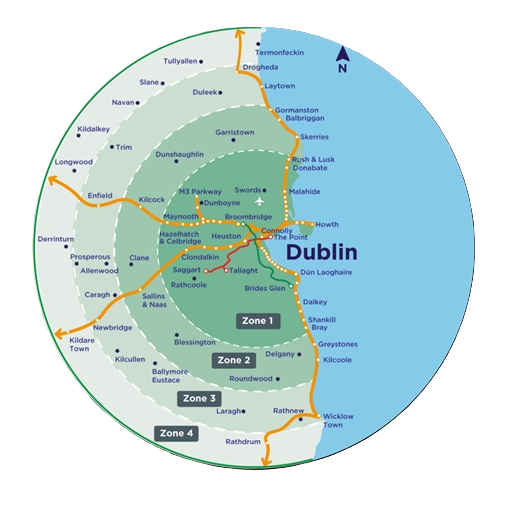
Above: Leap Card zones in Dublin. See here for a map of the overall public transport route network.
The Leap Visitor Card
If you’re only in Dublin for a couple of days and expect to use public transport a lot, the Leap Visitor Card is worth a look. It gives unlimited travel for 1, 3, or 7 consecutive days on Dublin Bus, the Luas, DART and commuter rail services.
Pricing is based on zones, Dublin and its surrounding area are divided into four, shown above. Most visitors sticking to the city centre only need Zone 1, but if you're planning to travel regularly to somewhere further out, say Bray or Maynooth, it's worth checking which zone that falls into before picking your pass.
That makes it handy if you’re planning to hop around the city rather than just making one or two journeys. If you’re only doing the odd trip, though, a regular Leap setup (loading money onto the card and using it as you need it) may be the better shout.
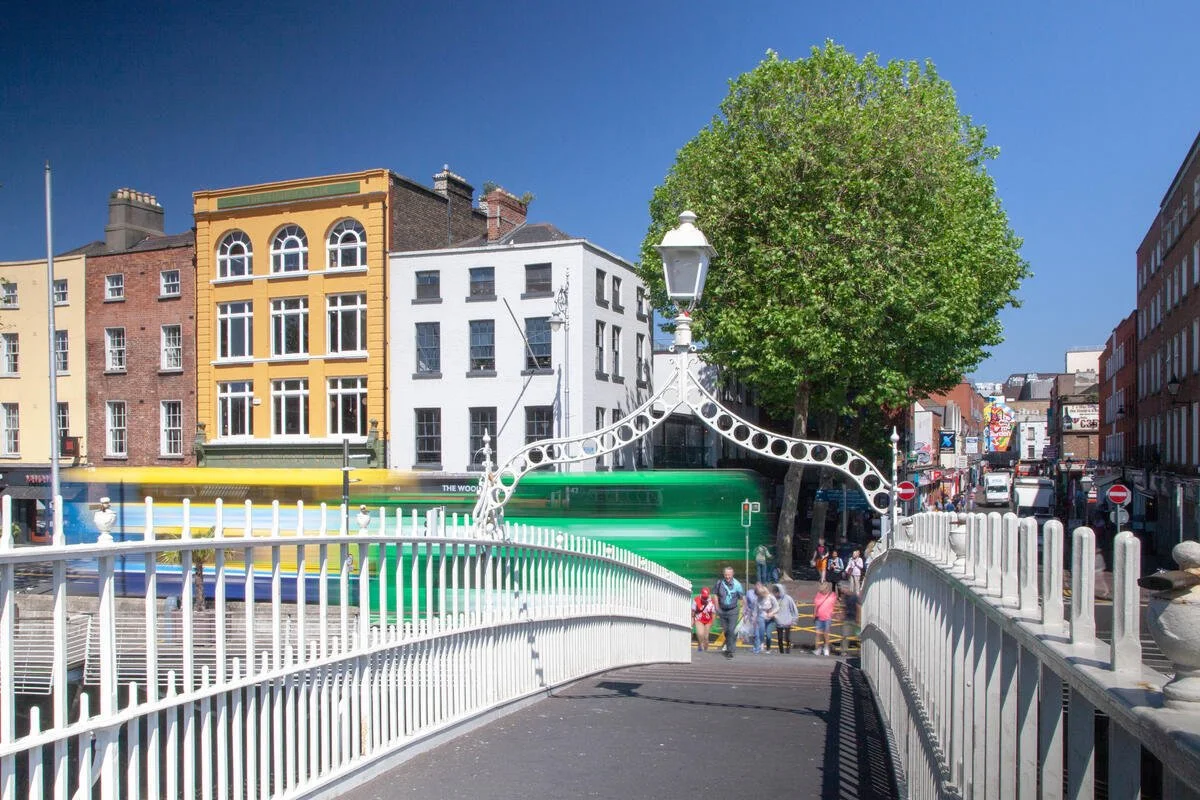
Dublin Bus and Go-Ahead
Dublin Bus has an extensive network, and most of the main routes are frequent enough to be useful without much planning. The route system has been undergoing an overhaul, which has not delighted everyone, but that’s life.
Go-Ahead Ireland also runs some Dublin city bus routes. These are especially useful for trips around the outer suburbs and parts of Dublin that are not always as neatly covered as the centre. They’re part of the city network too, so don’t ignore them just because the logo is different.
The TFI Live app is the best way to check departures in real time. There are digital boards at many stops, but these can be unreliable. The app is usually the safer bet. If you’re in a hurry, plan to arrive at the stop a little earlier than you need, in case your bus or tram is delayed. Buses are frequent, but they do not always feel compelled to arrive exactly when the timetable says they should!
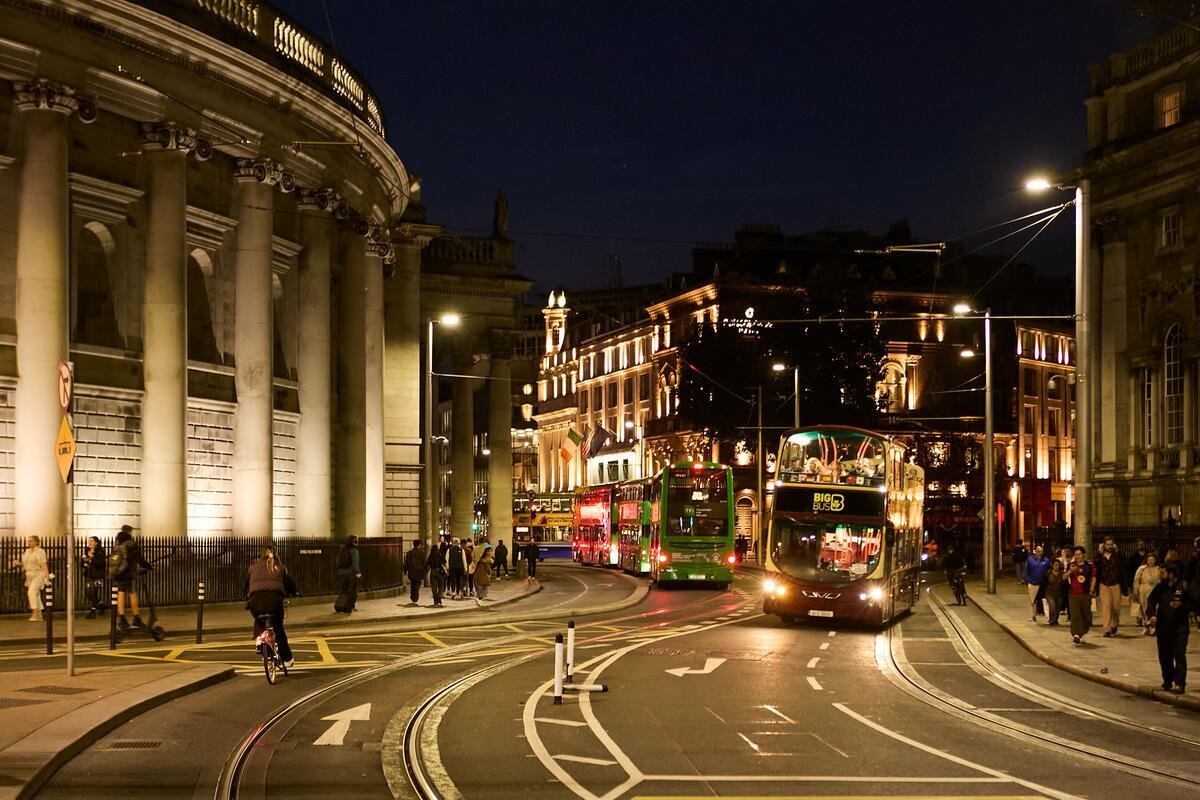
Most city buses in Dublin are double‑deckers, with the easiest seats to reach on the lower level; on busy routes, you may need to climb the narrow stairs to find a free seat upstairs.
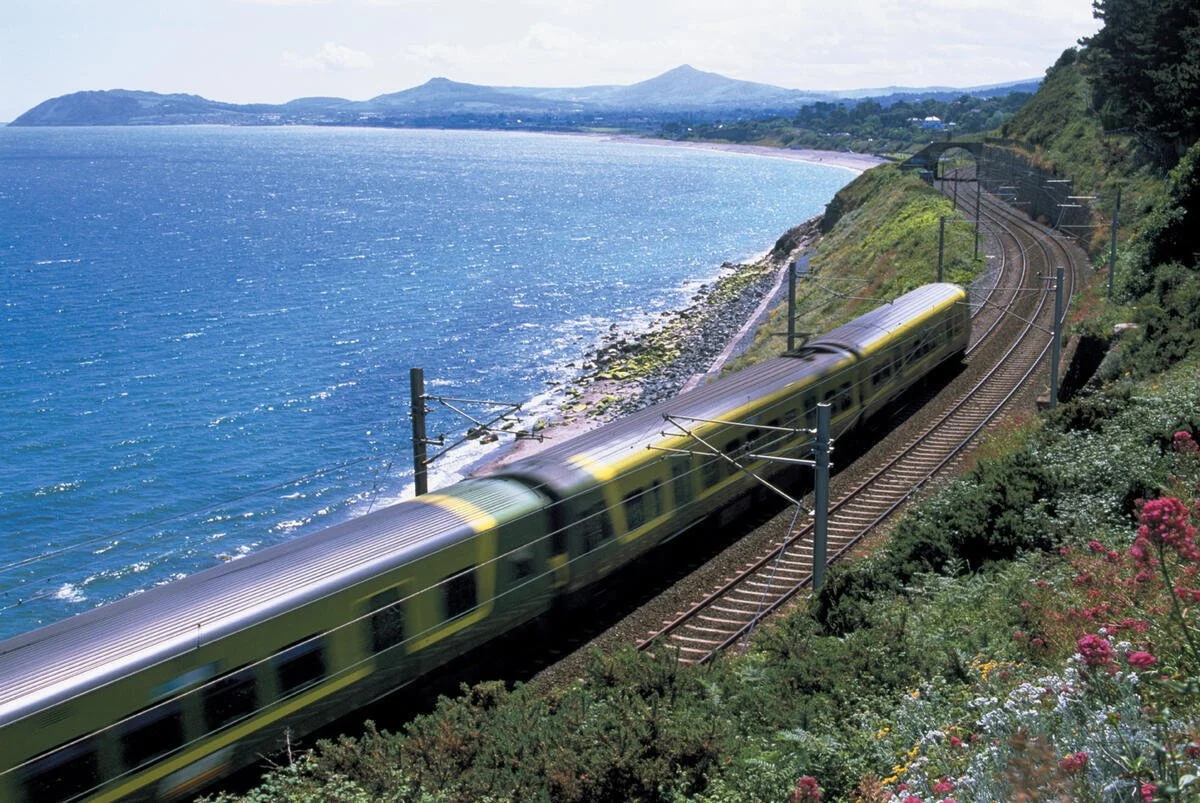
The southern stretch of the DART line is a beaut - Chef’s Kiss
The DART
Did you know the DART runs on one of the oldest suburban railway routes in the world? Go us! Well, unfortunately, not a whole load of stations have been added since then.
Still, it’s a very useful option, especially if you’re staying near the coast of Dublin Bay or want to get out to the seaside. Howth is a beautiful fishing village (now part of the northern suburbs of the city), and the Forty Foot in Dún Laoghaire is an iconic swimming spot that gets very popular on a sunny day.
For a bit of a day trip, the southern part of the line includes a lovely scenic stretch between Bray and Greystones. Both are worth a visit in their own right if you’ve got the time.
Connolly Station on the northside and Pearse Station on the southside are the two main city-centre stations for the network. Just remember that DART travel works on a tap-on, tap-off basis with your leap card when entering and exiting the platforms.
It stands for Dublin Area Rapid Transport - DART. A tidy anagram if we do say so ourselves. Rapid may be a slight stretch, but it’s a great service for the coastal neighbourhoods it covers. We have a bit of a habit of naming our transport networks with an implication of rapidity actually, which brings us to…

The Luas
The Luas is Dublin’s tram system, and it’s one of the easiest parts of public transport to use. Luas is the Irish word for “speed”. It’s a somewhat puzzling choice but we won’t get into that here. It’s smooth, runs through the city centre and has high capacity for travelling at peak hours. Not many Dubliners would remark on its speed being its defining characteristic, but here we are. That’s the name, that’s what we call the tram!
There are two lines and they cover a solid chunk of the city. Roughly speaking, the Red Line flows east-west and the Green Line goes north-south. They intersect in the O’Connell Street area. The Red Line connects Connolly Station to Heuston Station, which is handy if you’re connecting with intercity rail.
It’s clean, frequent, and straightforward. The digital boards with estimated arrival times for trams are, on the whole, much more accurate than is the case with buses.

Dublin Bikes
DublinBikes is the city’s public bike‑sharing scheme, similar to the docked rental bikes you see in other European capitals. You sign up with a bank card at a station or online, then take a bike from any dock and return it to another; the first 30 minutes of each trip are free, which is usually enough for most city‑centre hops. Over 30 minutes incurs a small increasing charge, but it still works out very reasonable. These can be a nice and accessible way to explore Phoenix Park, for example, which is the largest enclosed park in Europe (you will hear many Dubliners proudly remark on this fact).
A few caveats. These are sturdy, heavy bikes, which is a polite way of saying you’ll feel them going uphill. That being said, Dublin can often be quite windy, so these bikes work well for staying balanced when there are gusts of wind.
The Dublin 8 and Liberties area is unfortunately not especially well served by this service, so check the map before counting on it.
If you want a more flexible bike rental option, Bleeper and Moby are app-based alternatives. They’re usually a bit more expensive, but they can be easier to work into a less straightforward route.
Taxis
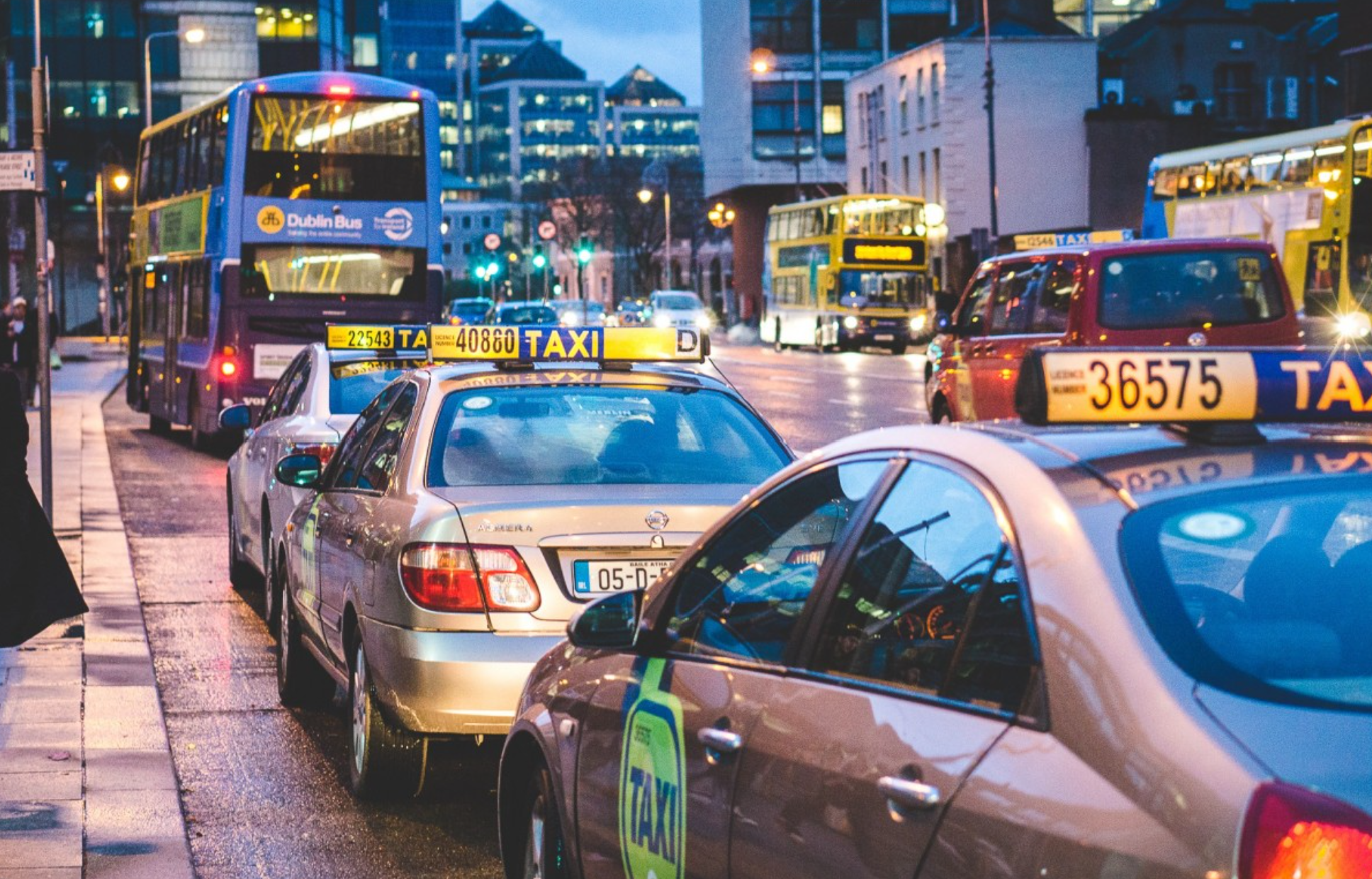
Taxis are easy enough to use in Dublin and they are usually in large supply. If the yellow light is on, the taxi is usually available, and you can often flag one down on the street.
There are taxi ranks in the city centre too, though pedestrianisation changes have meant there are somewhat fewer than there used to be. Just to note, you may want to avoid getting too deep into a conversation about pedestrianisation with a Dublin taxi driver! Then again, the driver may make that choice for you.
Uber is available in Dublin, just note that Uber here books licensed taxis rather than private cars, so it’s not notably cheaper than getting a taxi. Free Now is probably the taxi app most people use. Bolt is growing too, so you’ve got a few options if you’d rather not rely on finding one on the street.

Getting to and from the airport
If you’re heading into the city from Dublin Airport, skip the taxi queue unless you have a very good reason not to. Dublin Express and Aircoach are the main coach options. Both are much cheaper than a taxi, and they stop in many city centre locations (there are a few routes depending on the service).
Just note that these are private coach services, so the Leap Card doesn’t cover them. You’ll need a separate ticket, which you can buy online or at a desk by the airport bus stops before you board. During peak hours, these tend to operate every 10-15 minutes.
Final tips
Download the TFI Live app before you arrive. It covers real-time departures across the main public transport network and is more useful than guessing based on a timetable and optimism.
If the weather turns, the DART and Luas are usually the less annoying options. Buses still do the job, but rain has a way of making the whole system feel slightly less committed to your plans.
And if you’re only here for a short stay, don’t overcomplicate it. Leap, Luas, DART, buses, taxis - it’s all fairly manageable once you know the basics.
